Contact Us

Golfer’s Elbow

A Guide to Golfer's Elbow Symptoms, Causes, and Treatment in Singapore
Written by Dr James Tan
@drjames.rayofhealth
Dr James Tan | Ray of Health
@drjames.rayofhealth
Dr James Tan | Ray of Health

Summary:

Golfer's elbow, clinically known as medial epicondylitis, is an overuse injury affecting the tendons on the inner side of the elbow, where the forearm muscles that control wrist flexion and grip attach to the bone. Despite the name, it is far more common in people who perform repetitive gripping, twisting or wrist-flexing movements at work or in sport, from carpenters and manual labourers to gym-goers and racquet sports players. Left unaddressed, what begins as inner elbow tenderness can progress to chronic tendon degeneration, weakness and, in some cases, ulnar nerve irritation.

At Ray of Health, Dr James Tan provides thorough assessment and personalised treatment for golfer's elbow, from activity modification, bracing and targeted physiotherapy through to PRP injections, shockwave therapy and surgical tendon repair for persistent cases, with a structured return-to-activity programme to support lasting recovery.

Purpose

Relieving pain and tenderness at the inner elbow, restoring tendon health and grip strength, and preventing progression to chronic tendinopathy or nerve involvement.

Recommended for

Individuals experiencing inner elbow pain, forearm stiffness or weakness in grip that worsens with repetitive gripping, lifting or wrist-flexing activities.

Treatment approach

Ranges from rest, bracing, physiotherapy and ergonomic adjustment to corticosteroid or PRP injections, shockwave therapy and surgical debridement for cases that do not resolve with conservative care.

Hospital stay

Most treatments are outpatient. Surgery, when required, is typically performed as day surgery.

Recovery

Most cases improve steadily over several weeks to months with consistent conservative management. Chronic or surgical cases may require a longer rehabilitation.

Contents
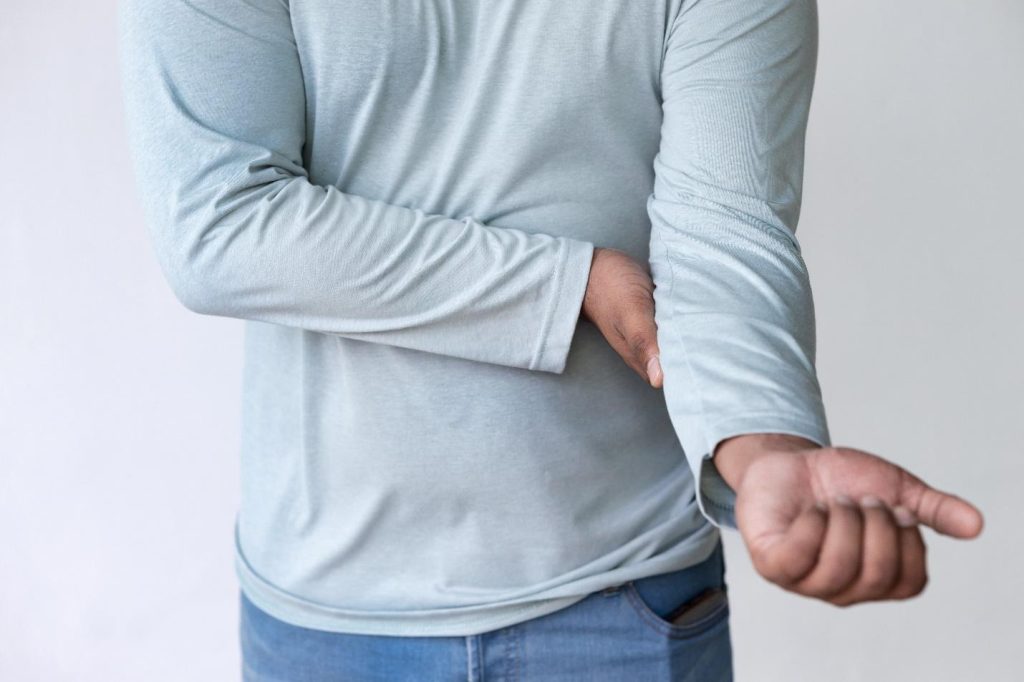
Golfer’s elbow is a painful condition caused by overuse of the tendons that are attached to the inner side of the elbow.

The inner side of the elbow is a complex junction where tendons, muscles and bones work together to allow smooth wrist and finger movement. These structures help you grip, lift and twist. These actions are performed countless times a day. When this balance is disrupted by repeated strain, the tendons that anchor the forearm muscles to the bony prominence of the elbow can become irritated and weakened.

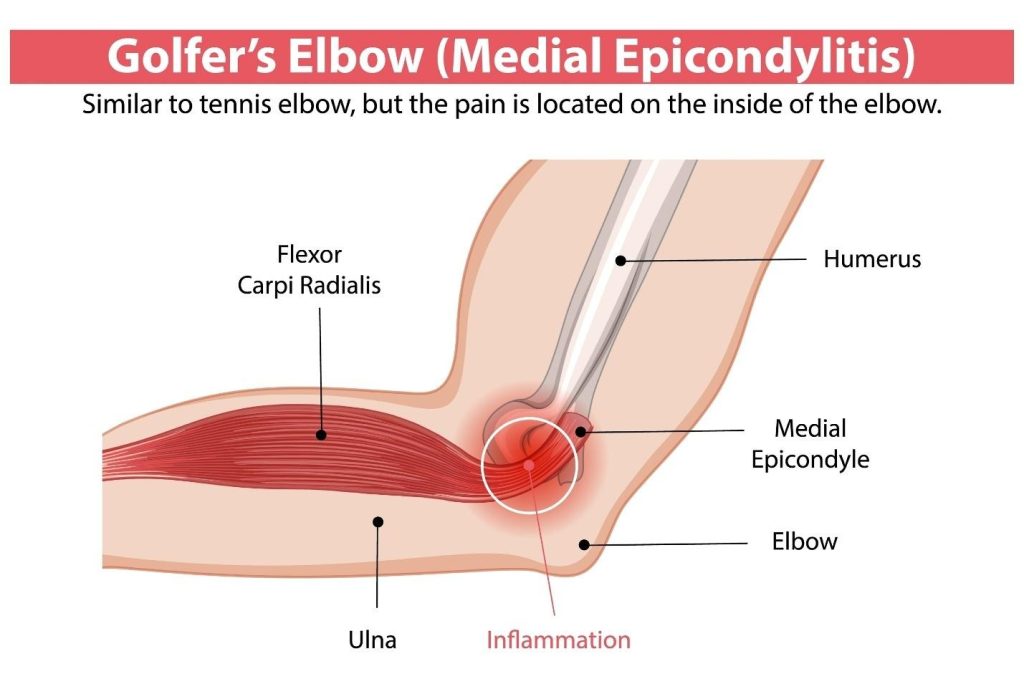
This condition is known as golfer’s Elbow or medial epicondylitis. It results in pain, tenderness and stiffness around the inner elbow, often radiating down the forearm. Although it is called golfer's elbow, the condition can affect anyone who performs repetitive wrist or gripping motions.

What causes Golfer’s Elbow?

Golfer’s elbow develops when the tendons responsible for flexing the wrist and fingers are repeatedly strained beyond their ability to recover. The injury is mechanical in nature, resulting from cumulative microtrauma that leads to inflammation, weakening and, in some cases, degeneration of the tendon fibres.

The typical mechanisms include:
  • Repetitive wrist movement – actions such as swinging a golf club, lifting weights or using tools involve repetitive wrist and hand movements. This gradually creates tiny microtears that slowly compromise tendon strength.
  • Forceful or awkward movements – lifting heavy objects suddenly or performing tasks with the wrist bent at awkward angles can place intense stress on the tendons, where they attach to bone.
  • Rapid increase in activity – a sudden surge in training intensity, duration or workload can overload the tendon before it has time to adapt, resulting in strain or partial tearing.
  • Poor technique or equipment – inaccurate swing mechanics, improper grip size or unsuitable tools alter the load distribution across the forearm, heightening tendon stress.
  • Muscle imbalance – when surrounding muscles, such as those in the shoulder or upper arm, lack strength, the smaller forearm tendons must compensate, leading to overuse.

What are the symptoms of Golfer’s Elbow?

The flexor tendons of the forearm, which control the wrist and finger movements, are most commonly affected in golfer’s elbow.

The condition usually develops gradually, with discomfort that worsens during gripping or wrist-flexing activities. The pain often starts mild and becomes more persistent if the underlying tendon strain is not addressed.

Some of the common symptoms are:

  • Forearm tightness or fatigue
  • Inner elbow pain or tenderness
  • Pain during wrist or finger motion
  • Reduced range of motion
  • Stiffness in the elbow
  • Weak grip strength
  • Occasional tingling or numbness.

Who is at risk of developing Golfer’s Elbow?

While anyone can develop golfer’s elbow, some people are more prone due to their daily activities, body mechanics or underlying health. This includes:

  • Age – most cases occur in middle-aged adults when natural wear on tendons combines with slower healing capacity.
  • Sports participation – activities like golf, tennis, rowing and weightlifting repeatedly strain the inner elbow tendons, especially when performed with poor form or overtraining.
  • Poor technique or ill-fitting equipment – incorrect grip size, improper posture or suboptimal mechanics can overload the forearm tendons unnecessarily.
  • Repetitive occupations – trades that rely on repetitive wrist or hand movements, such as carpentry, plumbing or assembly-line work, increase tendon exposure to cumulative stress.
  • Dominant arm use – overreliance on one arm for occupational or sporting tasks results in higher cumulative strain.

What are the possible complications if treatment is delayed?

When tendon overload continues unaddressed, short-term pain can give way to more persistent problems. This may include:
  • Chronic tendinosis – the tendon fibres become degenerated and less able to carry load, producing ongoing pain and weakness.
  • Compensatory injury – patients may overuse the opposite arm or shoulder, provoking secondary pain or strain.
  • Loss of grip strength – everyday tasks such as turning keys or carrying bags can become difficult.
  • Reduced work capacity – chronic pain can interfere with employment, hobbies and well-being.
  • Tendon partial tear or rupture – continued degeneration may progress to more structural damage, sometimes requiring surgery.
  • Ulnar nerve irritation – inflammation and scar tissue near the medial elbow can irritate the nearby nerve, causing numbness or tingling down the ring and little fingers.

How is Golfer’s Elbow diagnosed in Singapore?

An accurate diagnosis helps distinguish golfer’s elbow from other elbow or nerve conditions, ensuring the right treatment plan.

An accurate diagnosis is essential to distinguish golfer’s elbow from other causes of inner elbow or forearm pain, such as nerve entrapment or ligament strain. Dr James Tan typically combines one of the following diagnostic methods to confirm the diagnosis:

  • Medical history – Dr James Tan will ask about the onset, pattern and aggravating activities. He will also inquire about previous treatments and any relevant medical conditions. This helps identify possible mechanical causes and guides the exam.
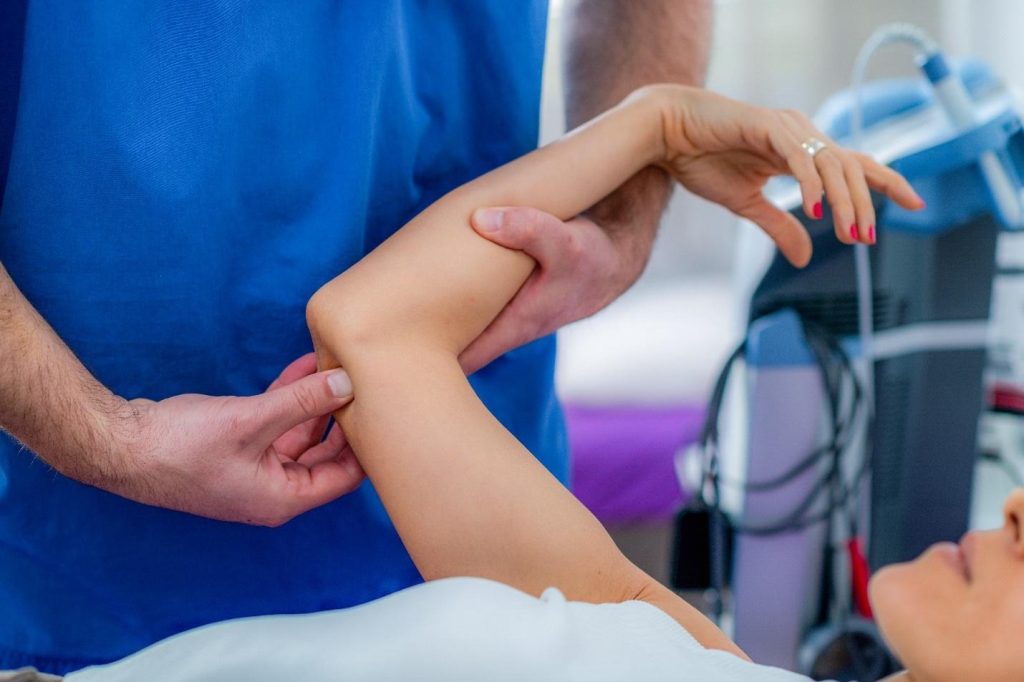
  • Physical examination – he will then palpate the medial epicondyle to localise tenderness, test resisted wrist flexion and forearm pronation to reproduce pain. This is also performed to assess grip strength and range of motion.
  • Imaging tests – depending on the severity of the pain as well as results from the physical examination, Dr James Tan will order imaging tests to be done to observe the tendon’s structure, surrounding soft tissues and calcification closely.
  • Diagnostic injection – a local anaesthetic into the tendon sheath can confirm the tendon as the pain source when the diagnosis is uncertain.

Treatment for Golfer’s Elbow 

The treatment for golfer’s elbow focuses on pain alleviation, restoring tendon health and preventing recurrence. Most people improve with a staged approach that begins conservatively and gradually advances to more modern approaches.

Some of the treatment options include:

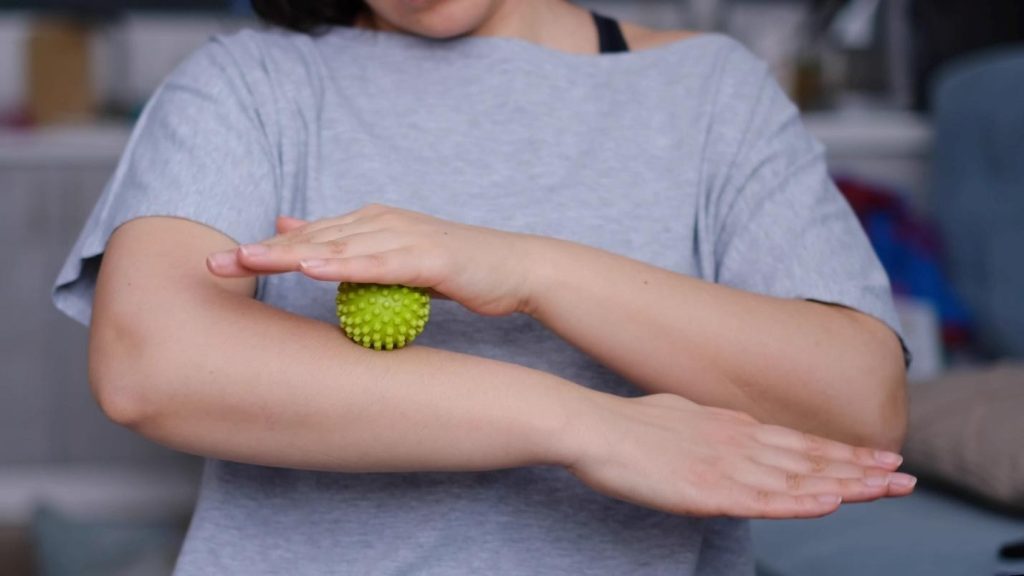
Targeted exercises can help relieve golfer’s elbow by reducing strain on the tendons and improving forearm strength. These simple movements support healing, reduce discomfort and help prevent recurrence.

Conservative Treatments

  • Counterforce bracing a forearm strap worn just below the elbow redistributes load away from the tendon insertion during activity and often lowers pain immediately.
  • Activity modification and rest – short term avoidance of aggravating tasks reduces ongoing microtrauma while maintaining gentle movement to prevent stiffness. Realistic modifications at work or in sport are discussed with the doctor.
  • Ice and compression – intermittent ice reduces local pain after activity, while compression can limit swelling in the acute phase.
  • Analgesia and topical agents – short courses of paracetamol or topical non-steroidal anti-inflammatory drugs (NSAIDs) gels provide symptom relief while you progress with rehabilitation. Oral NSAIDs may be used cautiously for brief periods.
  • Ergonomic adjustments – simple changes to tools, workstation setup or sports equipment can remove the repetitive stress driving the injury.

Non-Surgical Interventions

  • Physician-administered injections – Corticosteroid injections can provide rapid pain relief in selected patients, but their benefit is often short lived and repeated use may weaken tendon tissue. 
  • Platelet-rich plasma (PRP) therapy – PRP aims to stimulate healing by delivering concentrated growth factors to the tendon. Some patients experience meaningful improvement, particularly in chronic tendinopathy, but responses vary.
  • Local anaesthetic diagnostic injection – this can both confirm the pain source and provide temporary relief to allow focused rehabilitation.

Surgical Treatments

  • Tendon debridement and repair – the surgeon excises degenerate tendon tissue and stimulates healthy repair, sometimes reattaching the tendon to bone. Techniques may be open or minimally invasive.
  • Ulnar nerve decompression or transposition – if nerve irritation is present, surgical nerve release may be performed concurrently.
  • Post-operative care – surgery is followed by a staged rehabilitation programme. Early motion is encouraged while load is carefully progressed over weeks to months.

Rehabilitation

  • Acute phase – gentle pain-free range of motion and isometric exercises to maintain muscle activation without stressing the tendon.
  • Load management and eccentric strengthening – gradual introduction of controlled eccentric and concentric loading of the wrist flexors builds tendon resilience. Eccentric exercises are a mainstay of long-term recovery.
  • Manual therapy and soft tissue work – targets local tightness, improves circulation and helps break down dysfunctional scar.
  • Neuromuscular retraining – correcting movement patterns from the shoulder to the wrist prevents recurrence by distributing load more evenly.
  • Functional and sport-specific progression – therapy advances to task or sport specific drills and a graded return to full activity under supervision.

Alternative Therapies

  • Extracorporeal shockwave therapy (ESWT) – non-invasive shockwaves may stimulate local blood flow and repair in chronic tendinopathy for patients who prefer to avoid injections. 
  • Acupuncture and dry needling – some patients find symptom relief; these are best used alongside a structured exercise programme.
  • Therapeutic ultrasound and laser – these modalities can be useful adjuncts in some programmes but offer variable clinical benefit.

Recovery and Post-treatment Care

Healing from golfer’s elbow is gradual, as tendons take time to repair and strengthen. Most patients begin to notice steady improvement within several weeks, though full recovery may take a few months depending on the severity of tendon damage and adherence to therapy.

Regular physiotherapy helps restore flexibility and grip strength, while modifying daily habits reduces strain on the healing tendon. Ongoing follow-up with your doctor ensures progress is monitored and any recurrence is managed early.
Book an Appointment

Early intervention relieves pain faster, prevents tendon degeneration and supports a full return to activity.

Golfer’s elbow may begin as a niggle but can become a persistent problem if the mechanical cause is not addressed. Most cases respond well to careful activity modification, targeted rehabilitation and, when appropriate, precise medical or procedural treatments.

If inner elbow pain is limiting your work, sport or daily activities, book a consultation with Dr James Tan. He will perform a full assessment, explain your options and design a treatment plan that aims to relieve pain, restore strength and get you back to the things you enjoy.

Frequently Asked Questions

Although both affect the elbow, golfer’s elbow involves the inner (medial) side where the wrist flexor tendons attach, while tennis elbow affects the outer (lateral) side involving the extensor tendons. The movements and muscles involved differ, which influences the treatment approach.

Yes. Most cases improve with non-surgical management such as activity modification, physiotherapy, bracing and in some cases, regenerative treatments like PRP therapy. Surgery is only considered when symptoms persist despite comprehensive conservative care.

Avoid repetitive gripping, lifting heavy objects or activities that involve forceful wrist flexion. Using proper ergonomics at work and during sports helps reduce unnecessary stress on the tendons.

You can continue low-impact activities that do not worsen the pain, such as walking or stationary cycling. Strengthening and stretching exercises prescribed by a physiotherapist are safe and essential for recovery.

Disclaimer

The information provided on this page is for educational purposes only and is not intended as a substitute for professional medical advice or treatment. Always consult your healthcare provider or specialist doctor regarding any medical condition that you might be facing and act on the doctor’s recommendations.


Personalised Sports Orthopaedic Consultation in Singapore

If you are experiencing joint pain, sports injuries or musculoskeletal concerns, our Sports Orthopaedic Surgeon can provide a personalised consultation and assessment to better understand your condition and discuss suitable treatment options.

Camden hospital
1 Orchard Boulevard, #09-06
Singapore 248649
Mount Alvernia Hospital
820 Thomson Road
Medical Centre D #05-60
Singapore 574623

Dr James Tan Chung Hui

Treatment Process With Our Sports Orthopaedic Surgeon

Dr James Tan, our golfer's elbow specialist at Ray of Health, deals with various orthopaedic conditions of the body. He advises his patients to consult him in case of any pain or injury at the earliest so that the condition can be assessed and diagnosed properly.

About Dr James
Adjunct Assistant Professor (NUS, LKC) and Senior Consultant
Orthopaedic Surgery, Sports & Exercise Medicine
Language Spoken
English, Mandarin, Hokkien, Teochew, Malay
Step01
Registration
Register with Dr James' team and book an appointment here.
Book an
Appointment
Step02
First appointment
At the first appointment, Dr James Tan will carry out a thorough physical exam for your elbow pain, and evaluate your medical history.
Step03
Diagnosis
Typically, additional diagnostic tests are required to assess the causes of the problems accurately. This usually comes in the form of MRI or X-ray scans.
Step04
Personalised Treatment Plan
Dr James will then create a personalised treatment plan based on your specific condition and needs, which could include undergoing surgery, and recommend the necessary treatment modalities to you.
Step05
Follow-up sessions
Dr James will schedule additional follow-up sessions to monitor the recovery process until you fully recover.
Disclaimer: Treatment plans may differ for different patients. Please contact Dr James for more information.

Accreditations

MediSave & Insurance Shield Plan Approved

If you are a Singaporean or a Permanent Resident of Singapore, some of our orthopaedic procedures can be claimed under MediSave. The claimable amount will vary based on the procedure's complexity.

For other situations, please consult our friendly clinic staff regarding the use of your Integrated Shield Plan insurance.

Accreditations

Corporate Insurance

Golfer's Elbow Exercises

Try these effective exercises for elbow pain relief.

Dr James Tan

MBBS (S’pore) | MRCS (Edin) | MMed (Orth) | FRCS Orth & Tr (Edin)

Restoring Strength, Mobility and Confidence.

This article has been medically reviewed by Dr James Tan
Dr James Tan is an Orthopaedic Surgeon with a strong focus on sports injuries of the knee, shoulder and elbow. Skilled in minimally invasive tendon and ligament repair, cartilage and meniscus surgery, as well as joint replacement and complex shoulder reconstruction, he offers patients advanced treatment options tailored to restore function and mobility.
hello@quantumortho.com.sg

Ready to Take the First Step Toward Relief?

Speak With Us

Get in touch with Orthopaedic Specialist Dr James Tan today to discuss your concerns and explore the best treatment options for your bones, joints, muscles and spine.


    Camden Medical
    1 Orchard Boulevard, #09-06
Singapore 248649
    Mount Alvernia Hospital
    820 Thomson Road
Medical Centre D #05-60
Singapore 574623

    Monday - Friday: 8:30am - 5:30pm

    Saturday: 8:30am - 12:30pm

    Sunday & Public Holiday: Closed

    Contact Us
    Copyright 2026 © Ray of Health. All rights reserved.
    crosschevron-down