Contact Us

Degenerative Disc Disease

A Guide to Sports Injury Symptoms, Causes, and Treatment in Singapore
Written by Dr James Tan
@drjames.rayofhealth
Dr James Tan | Ray of Health
@drjames.rayofhealth
Dr James Tan | Ray of Health
Contents
degenerative disc disease affecting the cervical and lumbar spine.
Degenerative disc disease involves the gradual wear and tear of spinal discs, affecting mobility and comfort.

The spine is a supportive column made up of individual bones (vertebrae) separated by intervertebral discs. These discs function as cushions, absorbing impact from daily activities such as walking, bending and lifting. They also allow the spine to remain flexible while protecting the spinal cord and nerve roots. Healthy discs help maintain proper spacing between vertebrae, ensuring smooth movement and balanced load distribution.

Degenerative Disc Disease (DDD) refers to the gradual structural changes that occur when these discs lose hydration, elasticity and height over time. While disc changes can begin silently in early adulthood, they become increasingly common from the 40s onward as part of the natural ageing process.

Not everyone with disc degeneration experiences symptoms, but as structural integrity declines, the disc’s ability to manage mechanical stress may be reduced. DDD most frequently affects the cervical (neck) and lumbar (lower back) regions, where movement and load demands are greatest.

What are the types of degenerative disc disease?

DDD can affect different regions of the spine. The location influences how the condition behaves mechanically and how it may impact surrounding structures, such as:
  • Cervical Degenerative Disc Disease (Neck) — this involves degeneration of the discs in the cervical spine (C1 to C7). The neck supports the weight of the head and allows a wide range of motion, making these discs particularly susceptible to repetitive stress over time. As disc height reduces, it may alter neck alignment and increase strain on nearby joints and nerve pathways.
  • Lumbar Degenerative Disc Disease (Lower Back) — lumbar DDD affects the lower spine (L1 to L5), which bears most of the body’s weight and absorbs forces from standing, walking and lifting. Progressive disc thinning in this region can reduce shock absorption capacity and shift mechanical load to surrounding joints and ligaments. This is the most affected region due to its high load demands.
  • Thoracic Degenerative Disc Disease (Mid-Back) — thoracic DDD occurs in the mid-spine (T1 to T12). This region is stabilised by the rib cage, which limits movement compared to the neck and lower back. As a result, degeneration here is less common. When it does occur, it may influence posture and spinal balance due to changes in disc height and alignment.

What causes degenerative disc disease?

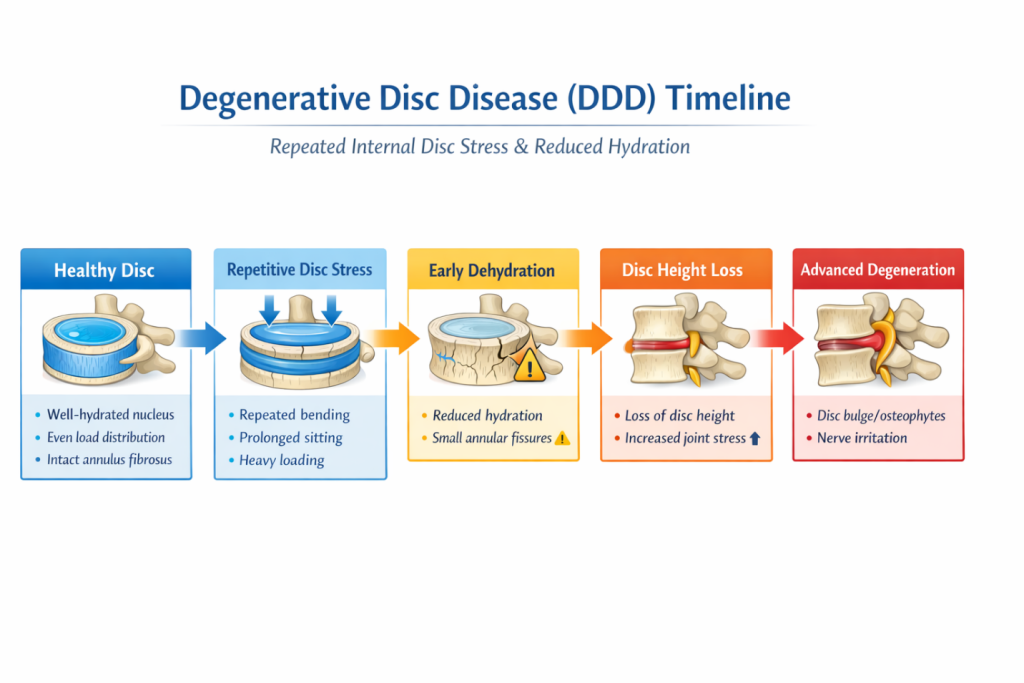
mechanisms of degenerative disc disease, including disc dehydration, annular tears and reduced disc height in the spine.
Degenerative disc disease develops when repeated internal disc stress and reduced hydration gradually weaken the disc structure over time.

The condition develops through mechanisms that gradually weaken the disc structure over time. This includes:

  • Loss of disc hydration — the nucleus pulposus gradually loses water-binding capacity, reducing its ability to distribute compressive forces evenly.
  • Breakdown of collagen fibres — weakening of the annulus fibrosus reduces containment strength and resilience.
  • Reduced nutrient diffusion — discs rely on diffusion for nutrition, impaired exchange limits cellular repair and regeneration.
  • Altered load transmission — as disc height decreases, mechanical stress shifts to adjacent vertebrae and facet joints.
  • Micro-instability — structural weakening may create subtle segmental instability, accelerating further degeneration.

What are the symptoms of degenerative disc disease?

Some of the common symptoms include:

  • Chronic neck or lower back pain — often worsens with activity and improves with rest.
  • Radiating pain — may extend into the arms, hands, legs or feet if nerve roots are affected.
  • Numbness or tingling — pins and needles sensations in affected areas.
  • Muscle weakness — may affect grip, walking or leg strength.
  • Reduced flexibility — stiffness in the spine, limiting movement.
  • Occasional flare-ups — sudden pain episodes triggered by heavy lifting, twisting or prolonged sitting.

Who is at risk of degenerative disc disease?

Although DDD is an increasingly common condition in Singapore, certain populations are more vulnerable due to pre-existing spine conditions, anatomy or lifestyle factors. This includes, but is not limited to:
  • Older adults — with age, discs naturally lose water content and elasticity, making them less resilient to everyday loading. Reduced spinal flexibility also shifts stress to specific segments, accelerating structural breakdown over time.
  • Family history of spinal problems — genetic variations can influence collagen structure and disc composition, resulting in discs that are more prone to dehydration, fissuring or early height loss compared to the general population.
  • History of spinal surgery — surgical alteration of spinal structures can change biomechanics at adjacent levels. This may increase mechanical demand on neighbouring discs, predisposing them to earlier degeneration.
  • Previous spinal injuries — trauma can disrupt disc integrity or vertebral alignment. Even after healing, subtle structural changes may reduce the disc’s ability to distribute load evenly, leading to progressive wear.
  • Those with physically demanding jobs — repetitive lifting, bending, twisting or prolonged exposure to vibration create cumulative micro-stress within the disc. Over time, this repetitive strain accelerates disc dehydration and structural weakening.
  • Poor posture or sedentary lifestyles — sustained sitting or habitual slouching alter pressure distribution within the disc and reduce the natural pumping mechanism that maintains disc hydration. Weak supporting muscles further shift the load directly onto the disc.
  • Obesity — excess body weight increases compressive forces across spinal segments. This elevated load raises internal disc pressure, accelerating thinning and loss of disc height.
  • Smokers — nicotine reduces blood flow and oxygen delivery to spinal tissues. Because discs rely on diffusion for nutrition, impaired circulation limits their ability to maintain structure and repair minor damage, promoting earlier degeneration.

How is degenerative disc disease diagnosed in Singapore?

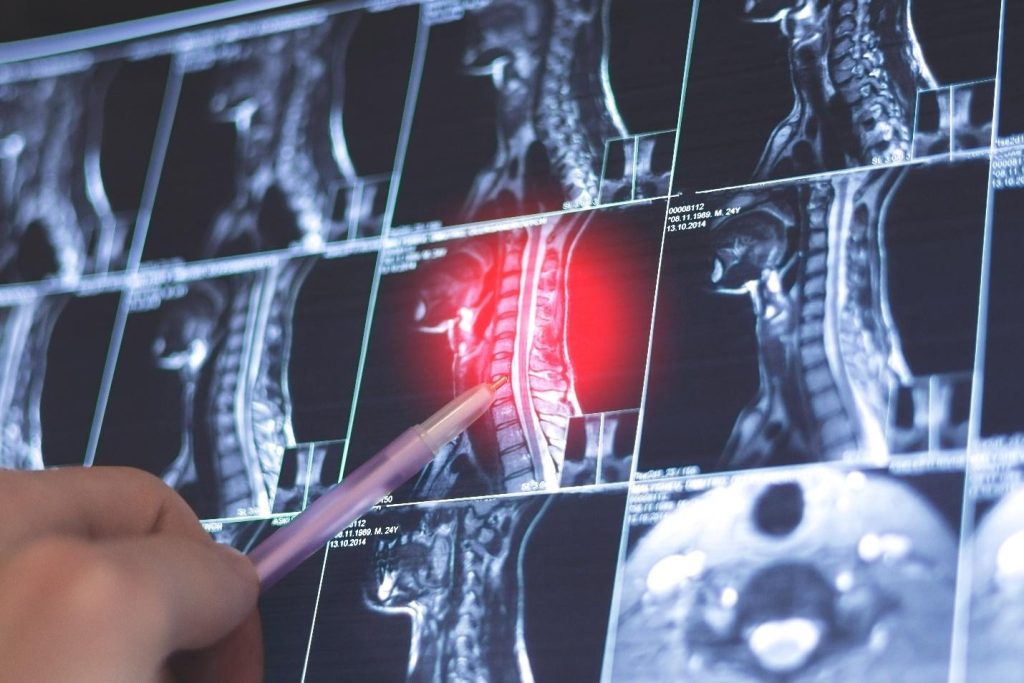
clinical and imaging assessment for degenerative disc disease in Singapore.
Diagnosis combines clinical evaluation and imaging to determine disc health and nerve involvement.

Dr James Tan performs a structured and DDD-specific evaluation to determine disc integrity, spinal stability and neural involvement.

The procedure entails:

  • Clinical history — this focuses on understanding several key factors such as the pattern of mechanical pain, the duration and progression of the pain and the history of repetitive strain or prior spine issues.
  • Pain assessment — a pain assessment is performed to identify the pain severity scoring and to understand whether the pain is mechanical or inflammatory. It is also conducted to determine the thresholds of activity tolerance.
  • Neurological assessment — because disc degeneration can affect nearby nerve roots, the evaluation includes:
  • Sensory testing
  • Muscle strength grading
  • Reflex assessment
  • Nerve tension signs where appropriate
  • Functional and strength assessment — this is performed to understand essential elements such as:
    • Core muscle stability
    • Segmental spinal movement control
    • Postural alignment
    • Gait evaluation
  • Imaging examination — these are used to confirm structural disc changes and stage severity:
  • X-ray — evaluates disc height loss and spinal alignment
  • Magnetic resonance imaging (MRI) — assesses disc hydration, annular integrity and nerve proximity
  • Computed tomography (CT) scan — detailed bony evaluation when required

What are the stages of degenerative disc disease?

Identifying the stage of the degeneration is an important step in the diagnostic process. This helps guide treatment planning and set realistic expectations.

The classifications are:

STAGE OF DEGENERATIONCHARACTERISTICS
Early degenerationMild disc dehydrationMinimal height lossPreserved spinal stability
Progressive degenerationNoticeable reduction in disc heightIncreased stress on facet jointsPossible disc bulging
Advanced degenerationSignificant disc collapseReduced spinal flexibilitySecondary joint changes or instability

How is degenerative disc disease treated in Singapore?

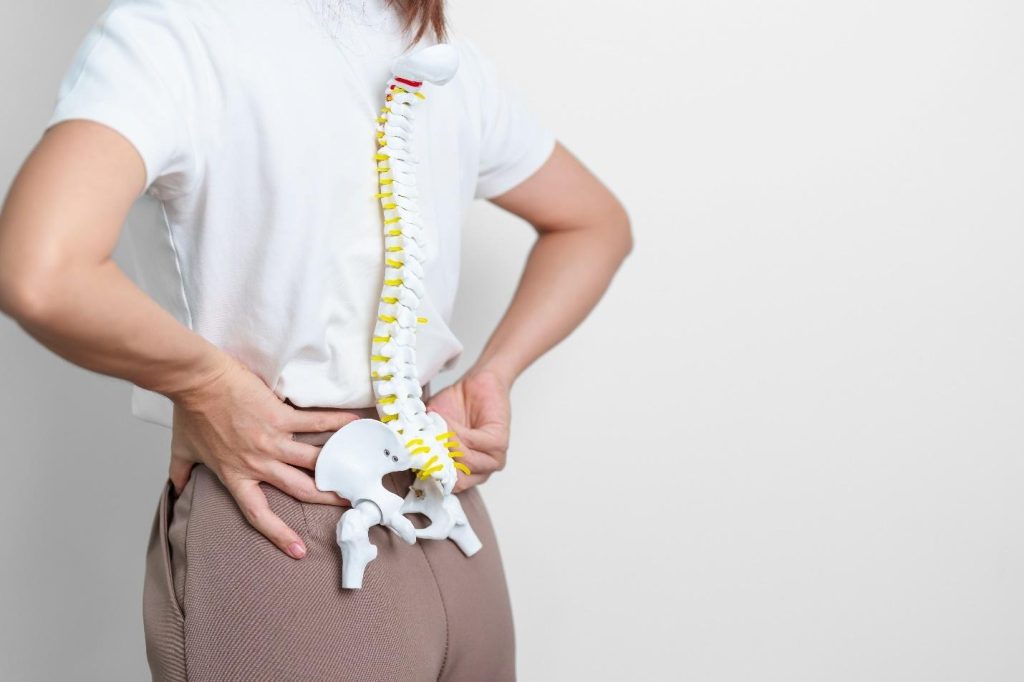
There is no cure for DDD as it is a natural part of ageing and wear. While surgery is only considered in severe cases with persistent nerve compression or spinal instability, the treatment plan is often outlined to manage and alleviate symptoms through a multi-approach plan, which entails:
Conservative management

  • Load modification reducing excessive compressive forces
  • Structured activity guidance protecting the disc while maintaining mobility
  • Oral medication short-term pain modulation during flare episodes

Targeted rehabilitation

  • Segmental stabilisation therapy improving deep spinal muscle control
  • Core strengthening programmes restoring mechanical support
  • Movement retraining — correcting faulty loading patterns
  • Endurance conditioning — improving spinal tolerance to daily activities

Interventional treatments (selected cases)

Non-surgical treatments

  • Nucleoplasty / annuloplasty — reduce disc pressure or seal small annular tears, helping to relieve disc-related pain while preserving surrounding structures
  • Nerve root injection — targeted delivery of anti-inflammatory medication around an irritated nerve root to reduce pain, swelling and radiating symptoms
  • Radiofrequency ablation — uses controlled heat to interrupt pain signals from affected facet joints or nerves, offering longer-lasting relief in selected cases 

Surgical treatments

  • Minimally invasive spine surgery (MISS) — uses smaller incisions and specialised instruments to access the spine with minimal disruption to surrounding muscles and tissues, typically resulting in less post-operative pain and faster recovery
  • Discectomy / microdiscectomy — removes the portion of a damaged disc that is pressing on a nerve root, relieving leg pain or sciatica while preserving as much of the disc structure as possible
  • Spinal decompression (laminectomy) — removes part of the vertebral bone to widen the spinal canal and relieve pressure on the spinal cord or nerve roots, commonly used when narrowing of the canal (spinal stenosis) accompanies disc degeneration
  • Spinal fusion — joins two or more vertebrae to stabilise a painful or unstable spinal segment, eliminating movement at the affected level and reducing pain caused by abnormal motion
  • Artificial disc replacement — replaces a severely degenerated disc with a prosthetic implant designed to maintain natural movement at that spinal level, offered as an alternative to fusion in carefully selected patients

Book an Appointment

booking a medical assessment for degenerative disc disease.
Taking immediate action supports mobility, encourages confidence and independence, on top of pain relief.

Persistent back or neck discomfort is often dismissed as just ageing. However, early disc changes respond better to structured care than advanced degeneration.

If your daily activities are becoming more limited or pain keeps recurring, it may be time to seek clarity. Calling or booking an appointment with Dr James Tan allows you to understand what stage your spine is in and what practical steps can protect it long-term.

Find A Sports Injury Clinic in Singapore

As much as being active and playing sports can boost your health and overall well-being, accidents happen and those sweat sessions can take their toll on your body in the long term. That’s why it’s important to understand and treat sports injuries.

Are you looking for a sports injury doctor in Singapore? We are ready to help! We specialise in sports medicine and our doctors can diagnose your issue and help manage your condition with our customised treatments for sports injuries. At Ray of Health, we also provide shoulder dislocation treatmentACL tear treatment and wrist injury treatment.

Camden hospital
1 Orchard Boulevard, #09-06
Singapore 248649
Mount Alvernia Hospital
820 Thomson Road
Medical Centre D #05-60
Singapore 574623

Treatment Process With Our Sports Injury Doctor

Treatment Process With Our Sports Injury Doctor

Dr James Tan, our sports injury specialist at Ray of Health, deals with various orthopaedic conditions of the body. He advises his patients to consult him in case of any pain or injury at the earliest so that the condition can be assessed and diagnosed properly.

About Dr James
Adjunct Assistant Professor (NUS, LKC) and Senior Consultant
Orthopaedic Surgery, Sports & Exercise Medicine
Language Spoken
English, Mandarin, Hokkien, Teochew, Malay
Step01
Registration
Register with Dr James' team and book an appointment here.
Book an
Appointment
Step02
First appointment
At the first appointment, Dr James Tan will carry out a thorough physical exam for your knee pain, and evaluate your medical history.
Step03
Diagnosis
Typically, additional diagnostic tests are required to assess the causes of the problems accurately. This usually comes in the form of MRI or X-ray scans.
Step04
Personalised Treatment Plan
Dr James will then create a personalised treatment plan based on your specific condition and needs, which could include undergoing surgery, and recommend the necessary treatment modalities to you.
Step05
Follow-up sessions
Dr James will schedule additional follow-up sessions to monitor the recovery process until you fully recover.
Disclaimer: Treatment plans may differ for different patients. Please contact Dr James for more information.

Accreditations

MediSave & Insurance Shield Plan Approved

If you are a Singaporean or a Permanent Resident of Singapore, some of our orthopaedic procedures can be claimed under MediSave. The claimable amount will vary based on the procedure's complexity.

For other situations, please consult our friendly clinic staff regarding the use of your Integrated Shield Plan insurance.

Accreditations

Corporate Insurance

Frequently Asked Questions

No, disc degeneration cannot be fully reversed, but symptoms can be managed and progression slowed with treatment.

Yes, symptoms may flare, especially with improper activity, posture or repetitive spinal stress. Treatment manages pain and function long-term but may need ongoing maintenance and lifestyle adjustments.

Most patients improve with structured rehabilitation within 6 to 12 weeks, while advanced degeneration may require longer-term symptom management.

Targeted exercises improve strength, flexibility and spinal support, reducing pain and recurrence risk.

Untreated DDD can lead to nerve compression, chronic pain, reduced mobility and secondary issues like sciatica or spinal stenosis.

Seek prompt attention if you notice:

  • Sudden weakness or numbness in limbs
  • Loss of bladder or bowel control
  • Severe pain that limits daily activities

While ageing cannot be halted, progression may be slowed by:

  • Maintaining a healthy body weight
  • Strengthening core musculature
  • Avoiding repetitive heavy spinal loading
  • Practising ergonomic posture
  • Staying physically active

Dr James Tan

MBBS (S’pore) | MRCS (Edin) | MMed (Orth) | FRCS Orth & Tr (Edin)

Restoring Strength, Mobility and Confidence.

This article has been medically reviewed by Dr James Tan
Dr James Tan is an Orthopaedic Surgeon with a strong focus on sports injuries of the knee, shoulder and elbow. Skilled in minimally invasive tendon and ligament repair, cartilage and meniscus surgery, as well as joint replacement and complex shoulder reconstruction, he offers patients advanced treatment options tailored to restore function and mobility.
hello@quantumortho.com.sg

Ready to Take the First Step Toward Relief?

Speak With Us

Get in touch with Orthopaedic Specialist Dr James Tan today to discuss your concerns and explore the best treatment options for your bones, joints, muscles and spine.


    Contact Us
    Camden Medical
    1 Orchard Boulevard, #09-06
Singapore 248649
    Mount Alvernia Hospital
    820 Thomson Road
Medical Centre D #05-60
Singapore 574623

    Monday - Friday: 8:30am - 5:30pm

    Saturday: 8:30am - 12:30pm

    Sunday & Public Holiday: Closed

    Copyright 2026 © Ray of Health. All rights reserved.
    crosschevron-down