


Sciatica is one of the most common causes of radiating leg pain in Singapore, affecting people across a wide range of ages and activity levels. It occurs when the sciatic nerve, the longest nerve in the body, is compressed or irritated along its pathway from the lower spine through the buttock and down the leg. The underlying cause can vary widely, from disc herniation and spinal stenosis to spondylolisthesis and degenerative joint changes, and because many of these conditions share overlapping symptoms, accurate diagnosis is essential to effective treatment. Left unaddressed, ongoing nerve compression can lead to chronic pain, persistent weakness and, in severe cases, long-term neurological deficits that are harder to reverse.
At Ray of Health, Dr James Tan provides thorough assessment and personalised treatment for sciatica and nerve compression across all causes and severity levels, from conservative management, physiotherapy and epidural injections through to minimally invasive procedures and surgical decompression where indicated, with structured rehabilitation to restore function, correct movement patterns and protect long-term nerve health.
|
Purpose |
Identifying and relieving the source of nerve compression, reducing radiating pain and neurological symptoms, and preventing progression to permanent nerve damage. |
|
Recommended for |
Individuals experiencing radiating leg pain, numbness, tingling or weakness that travels from the lower back or buttock down the leg, particularly when symptoms persist, worsen with movement or are accompanied by functional limitations. |
|
Treatment approach |
Ranges from activity modification, physiotherapy and pain management for most cases, to epidural steroid injections, nerve root injections, radiofrequency ablation and PRP for persistent nerve irritation, and microdiscectomy or spinal decompression for significant structural compression. |
|
Hospital stay |
Conservative and injection-based treatments are entirely outpatient. Surgical procedures such as microdiscectomy are typically performed as day surgery or with a short admission. |
|
Recovery |
Many patients experience meaningful improvement within weeks to months with conservative management. Surgical cases involve structured rehabilitation, with return to full activity guided by functional milestones over several months. |

The sciatic nerve is the largest and longest nerve in the human body. It originates from the lower lumbar and sacral spine, passes through the pelvis and buttock region and extends down the back of each leg to the foot. Because of its length and pathway, the sciatic nerve is particularly vulnerable to compression or irritation at multiple points along its course.
When treatment is delayed, ongoing nerve compression may lead to persistent inflammation and reduced nerve function. Over time, this can result in chronic pain, worsening numbness, muscle weakness, reduced mobility and difficulty performing daily activities. In more severe or prolonged cases, untreated nerve compression may cause long-term neurological deficits that are harder to reverse, even after intervention.
Sciatica occurs when nerves are mechanically stressed, irritated or compressed. Some of the key mechanisms include:
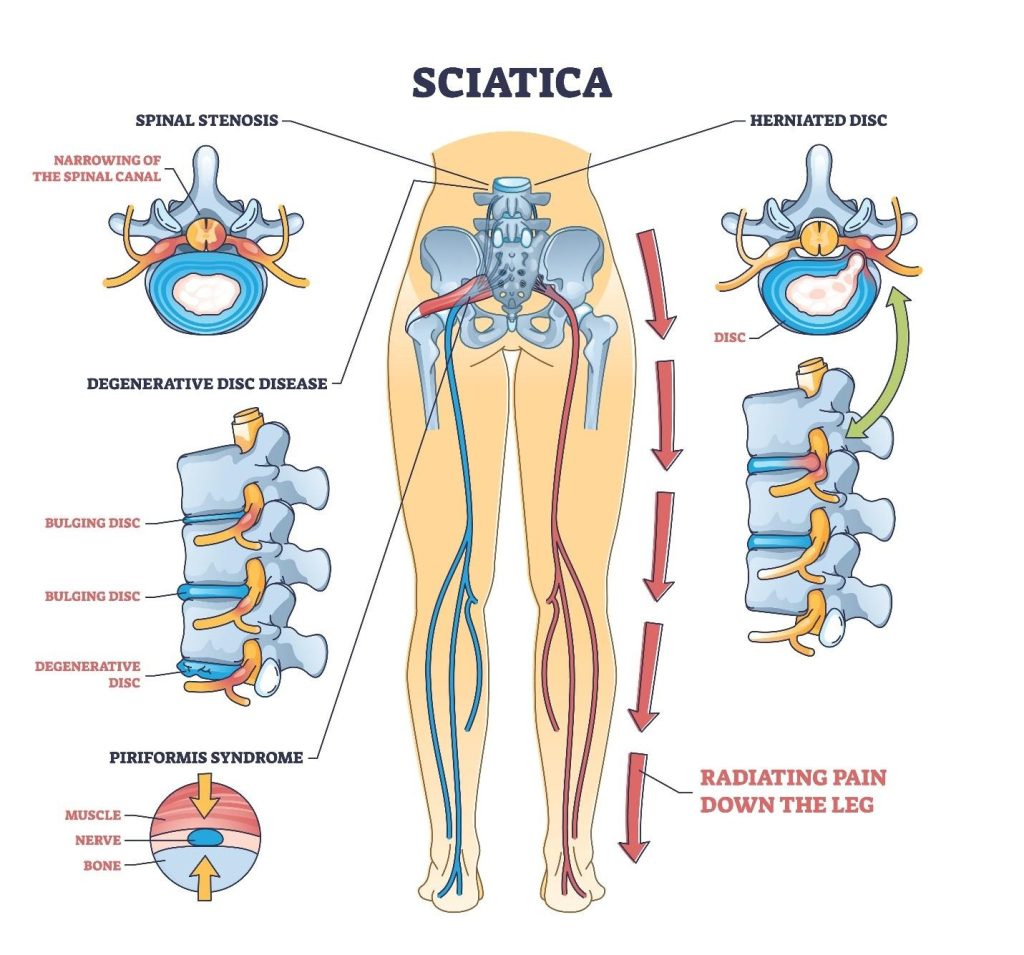
The condition typically causes the following symptoms:
Although sciatica and nerve compression are common conditions, certain populations are more vulnerable due to structural or lifestyle factors. This includes:
Although many patients use the term “slipped disc” interchangeably with sciatica, they are not the same. Sciatica refers to a set of symptoms, typically pain that radiates from the lower back down the buttock and leg due to irritation of the sciatic nerve.
A “slipped disc” (more accurately known as a disc herniation) is one possible cause of this nerve irritation.
| Aspect | Sciatica | Slipped Disc (Disc Herniation) |
| What it refers to | A group of symptoms | A specific structural condition |
| Definition | Pain radiating along the sciatic nerve (lower back to leg) | Displacement of disc material that may compress a nerve root |
| Type | Symptom description | Diagnosis |
| Common symptoms | Radiating leg pain, tingling, numbness, weakness | May cause sciatica if a nerve is compressed |
| Cause | Nerve irritation or compression | Disc bulge or herniation pressing on a nerve |
| Always present together? | Not always caused by a disc issue | Does not always cause sciatica |
| Other possible causes | Spinal stenosis, degeneration, muscle-related compression |

Dr James Tan performs a structured evaluation to confirm nerve compression, assess severity and guide treatment. The process entails:
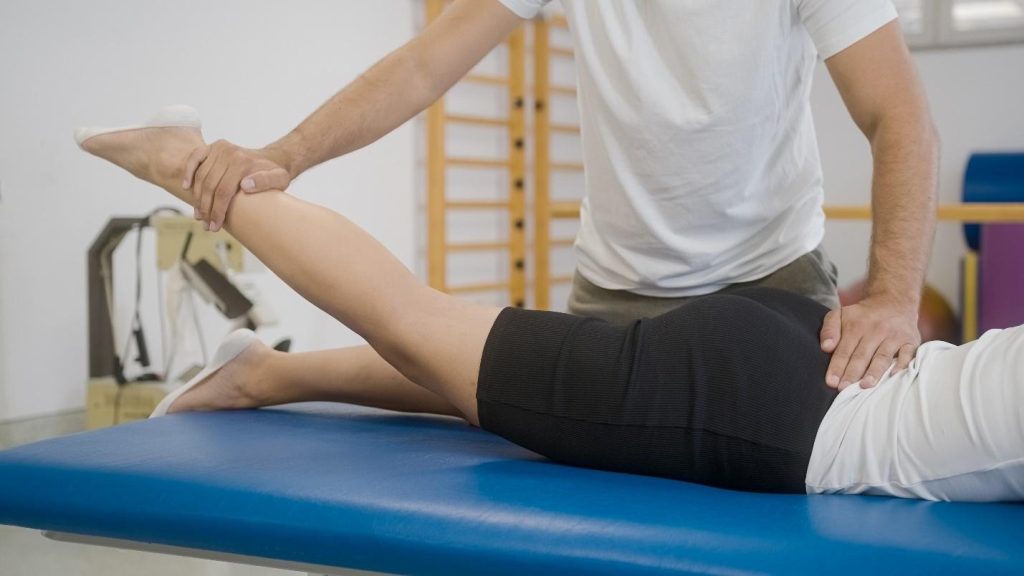
The treatment for sciatica and nerve compression focuses on alleviating the pain while increasing mobility. Depending on the severity of the condition, it may include:
Ongoing leg or back pain can be frustrating, especially when it starts to affect sleep, work or everyday movement. If symptoms such as numbness, tingling or weakness are not settling, it may be a sign that a nerve is being irritated rather than a simple muscle issue.
Booking an appointment with Dr James Tan allows you to understand what is driving your symptoms and receive a clear, step-by-step plan focused on relieving pain, protecting nerve health and helping you return to daily activities with confidence.
Sciatica specifically involves radiating nerve pain along the leg, whereas general back pain may remain local and muscular.
Incorrect or aggressive exercise may aggravate symptoms. Structured physiotherapy tailored to your condition is safest.
Mild cases may improve with rest, posture correction and conservative care, but persistent nerve compression requires medical evaluation.
Most cases respond to conservative or non-surgical care. Surgery is only reserved for persistent pain, weakness or severe nerve compression.
The timeline depends on the severity of your condition, but generally:
Some of the tips to prevent sciatica are:
Do seek medical attention if you experience:
If you are experiencing joint pain, sports injuries or musculoskeletal concerns, our Sports Orthopaedic Surgeon can provide a personalised consultation and assessment to better understand your condition and discuss suitable treatment options.


Dr James Tan, our sports injury specialist at Ray of Health, deals with various orthopaedic conditions of the body. He advises his patients to consult him in case of any pain or injury at the earliest so that the condition can be assessed and diagnosed properly.


If you are a Singaporean or a Permanent Resident of Singapore, some of our orthopaedic procedures can be claimed under MediSave. The claimable amount will vary based on the procedure's complexity.
For other situations, please consult our friendly clinic staff regarding the use of your Integrated Shield Plan insurance.


Get in touch with Orthopaedic Specialist Dr James Tan today to discuss your concerns and explore the best treatment options for your bones, joints, muscles and spine.


Monday - Friday: 8:30am - 5:30pm
Saturday: 8:30am - 12:30pm
Sunday & Public Holiday: Closed


