Contact Us

Achilles Tendinitis / Rupture

Achilles Tendinitis and Rupture: Causes, Symptoms and Treatment in Singapore
Written by Dr James Tan
@drjames.rayofhealth
Dr James Tan | Ray of Health
@drjames.rayofhealth
Dr James Tan | Ray of Health

Summary:

The Achilles tendon is the strongest tendon in the body, and also one of the most commonly injured. Achilles tendinitis develops when the tendon is repeatedly overloaded beyond its capacity to recover, resulting in progressive inflammation, degeneration and pain along the back of the heel or lower calf. Left unmanaged, what begins as morning stiffness or exercise-related discomfort can worsen into chronic tendinopathy or, in more severe cases, a partial or complete rupture that significantly disrupts mobility and function.

At Ray of Health, Dr James Tan provides thorough assessment and personalised treatment for the full spectrum of Achilles conditions, from conservative load management, shockwave therapy and PRP injections for tendinitis and tendinopathy, through to surgical tendon repair for complete ruptures, with a structured rehabilitation programme to restore calf strength, ankle mobility and confident push-off mechanics.

Purpose

Relieving Achilles tendon pain, promoting tendon healing and restoring push-off strength and function, while preventing progression to rupture or chronic tendinopathy.

Recommended for

Individuals experiencing pain, stiffness or swelling along the back of the heel or lower calf, particularly runners and active individuals, as well as those who have sustained a sudden loss of push-off strength that may indicate a rupture.

Treatment approach

Ranges from activity modification, footwear optimisation, physiotherapy and progressive loading for tendinitis, to shockwave therapy and PRP for chronic tendinopathy, and surgical repair for complete or severe ruptures.

Hospital stay

Conservative and injection-based treatments are entirely outpatient. Surgical repair requires a short admission or day surgery depending on complexity.

Recovery

Mild tendinitis may improve within several weeks with appropriate load management. Chronic tendinopathy and surgical cases require a longer structured rehabilitation programme, with return to running and sport typically spanning several months.

Contents
Achilles tendinitis and tendon rupture affecting walking, running and push-off strength.
Achilles tendinitis and rupture involve injury to the strongest tendon in the body, affecting mobility and activity.

The Achilles tendon is a thick, fibrous cord that connects the calf muscles, making it essential for everyday movement. It plays a vital role in walking, running, jumping and push-off power.

Achilles tendinitis refers to irritation, inflammation and degeneration of the tendon due to overuse or mechanical stress. In more severe cases, the tendon may partially or completely rupture.

What causes achilles tendinitis / rupture?

Achilles tendon problems typically arise when the tendon is repeatedly overloaded beyond its capacity to adapt. Some of the common contributing factors include:

  • Age-related degeneration — tendon elasticity diminishes with age, making it more susceptible to microtears.
  • Overuse and repetitive strain — frequent running, jumping or uphill activity without adequate loading progression.
  • Sudden increase in training intensity or volume — rapid spikes in mileage, speed or training frequency.
  • Tight calf muscles or limited ankle flexibility — restricted motion increases strain on the tendon during push-off.
  • Muscle imbalances — weakness in calf or foot muscles can shift excessive load onto the tendon.

In contrast, a rupture most often occurs during a sudden forceful movement, such as sprinting, jumping or pushing off explosively.
What are the symptoms of achilles tendinitis / rupture?

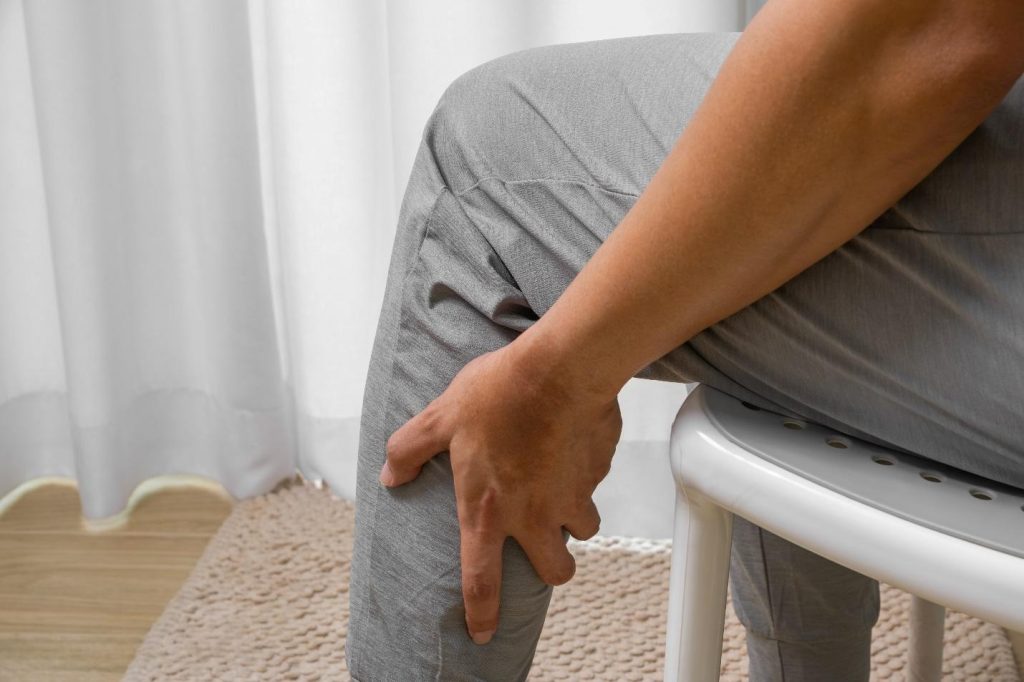
Achilles tendinitis and rupture symptoms such as stiffness, swelling and reduced push-off ability.
Symptoms vary depending on severity, activity level and whether the tendon is partially or completely torn.

Symptoms of Achilles tendinitis may develop gradually and include:

  • Pain and stiffness along the back of the ankle or heel, especially with activity
  • Tenderness when touching the tendon
  • Swelling or warmth around the tendon area
  • Pain that worsens at the beginning of activity and eases with rest
  • Tightness in the calf after periods of inactivity

Meanwhile, a rupture typically presents with:

  • A sudden, sharp pain in the back of the heel or lower calf
  • A feeling of being hit or kicked in the back of the leg
  • Difficulty pushing off the injured foot
  • Weakness in walking or inability to stand on tiptoe
  • A gap or depression is felt in the tendon area (in complete ruptures)

Who is more vulnerable to achilles tendinitis / rupture?

Certain individuals are more likely to develop Achilles problems due to:

  • Older adults — adults in their 30s to 50s are more vulnerable due to gradual age-related changes in tendon elasticity and blood supply, making the Achilles more vulnerable to degeneration and tearing under stress.
  • Foot mechanics issues — overpronation or flat feet alter force transmission through the ankle and heel, increasing cumulative load on the tendon during activity.
  • Athletes in explosive sports — basketball, tennis and football place high eccentric and acceleration forces through the tendon, increasing the likelihood of microtrauma or acute rupture.
  • People with limited flexibility or strength deficits — these conditions place increased tensile strain on the Achilles tendon during walking and push-off, accelerating tendon wear over time.
  • Recreational runners — these individuals are at higher risk because sudden fluctuations in running volume or intensity can overload the Achilles tendon before it has time to adapt.
  • Those with previous Achilles pain or injury — prior tendinitis or microtears may have underlying tendon degeneration or weakened fibres, reducing the tendon’s capacity to tolerate repeated loading.

What are the complications associated with achilles tendinitis?

Without appropriate management, Achilles conditions can progress and lead to complications such as:
  • Complete rupture — loss of continuity through the tendon, requiring more intensive treatment.
  • Chronic tendinopathy — long-standing tendon degeneration with persistent discomfort.
  • Reduced function and performance — persistent pain or weakness limiting activity.
  • Altered gait mechanics — compensatory movement patterns increase the risk of knee, hip or back issues.

How is achilles tendinitis / rupture diagnosed in Singapore?

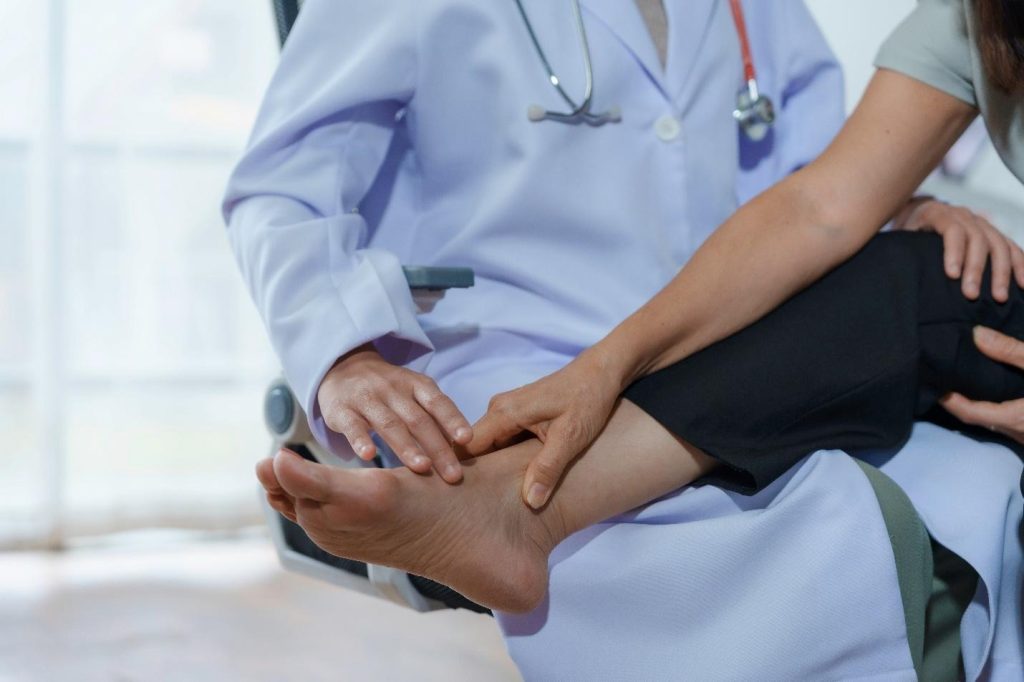
medical assessment and imaging for Achilles tendinitis or rupture in Singapore.
Diagnosis involves confirming tendon involvement while determining severity and guiding appropriate management.

Dr James Tan performs a structured assessment to confirm Achilles tendon pathology, determine whether the injury is inflammatory, degenerative or ruptured, and exclude other causes of heel or calf pain.

The process involves:
  • Clinical history — a detailed clinical history helps establish how the injury developed and what factors may be contributing to tendon overload. This includes:
    • Onset of pain or sudden injury
    • Recent changes in activity, training intensity or footwear
    • Previous Achilles symptoms or injuries
    • Occupational or sporting demands that stress the tendon
  • Symptom review — symptom patterns provide important clues about severity and tendon integrity. Dr James Tan will assess:
    • Location and nature of pain
    • Sudden loss of strength or push-off ability
    • Functional limitations in walking, running or climbing stairs
  • Physical examination — a focused examination assesses tendon structure and function, including:
    • Palpation for tenderness, thickening or gaps along the tendon
    • Assessment of ankle range of motion and calf flexibility
    • Strength testing and functional tasks, such as heel raises
    • Specific clinical tests to assess tendon rupture when suspected
  • Imaging examination — imaging is used selectively to confirm the diagnosis or assess severity:
    • Ultrasound  — evaluates tendon thickness, degeneration and partial tears in real time.
    • Magnetic Resonance Imaging (MRI)  — provides a detailed assessment of tendon integrity, surrounding tissues and extent of injury when symptoms are severe, persistent or unclear.

How is achilles tendinitis / rupture treated in Singapore?

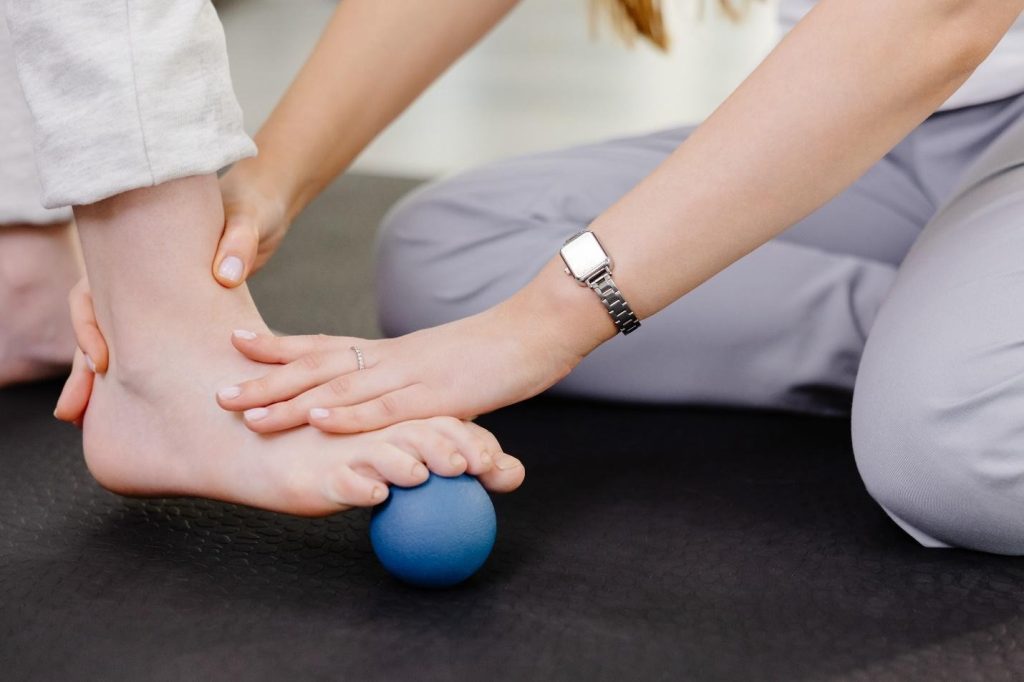
non-surgical and surgical treatment for Achilles tendinitis and rupture in Singapore.
Treatment focuses on relieving tendon stress, supporting healing and restoring function based on injury severity.

Treatment for Achilles tendinitis or rupture is individualised and depends on the extent of tendon damage, symptom duration and functional demands. It aims to reduce pain, promote tendon healing and support a safe return to activity.
Conservative management

  • Activity modification — reducing or avoiding activities that place excessive strain on the Achilles tendon, particularly running, jumping or uphill walking, to allow symptoms to settle.
  • Load reduction strategies — temporary adjustments to training intensity or frequency to prevent further tendon overload.
  • Footwear optimisation — reviewing shoe support and heel cushioning to reduce tensile stress on the tendon during daily activities.
  • Short-term pain relief — simple analgesics may be used selectively to manage discomfort while rehabilitation is initiated.

Non-surgical interventions

  • Shockwave Therapy (ESWT) — used in selected cases of chronic Achilles tendinopathy to stimulate tissue healing, improve pain and support tendon recovery when symptoms persist despite conservative care.
  • Platelet-Rich Plasma (PRP) injections — occasionally considered in cases of ongoing tendinopathy where degenerative tendon changes are present, intending to promote tissue repair using the body’s own growth factors.
  • Temporary immobilisation or bracing — may be recommended in partial tears or significant inflammation to protect the tendon during early healing phases.

Surgical management (selected cases)

  • Arthroscopy (Ankle) — minimally invasive techniques may be used to address associated ankle pathology or contributing intra-articular issues where relevant.
  • Open or minimally invasive tendon repair — considered in complete Achilles ruptures or severe tendon damage when non-surgical management is unlikely to restore adequate strength or function.

Rehabilitation and recovery

  • Progressive strengthening programmes — focused on restoring calf strength and tendon load tolerance in a controlled manner.
  • Flexibility and mobility training — addressing calf tightness and ankle stiffness that increase strain on the Achilles tendon.
  • Neuromuscular re-education — improving coordination, balance and push-off mechanics during walking and sport-specific movements.
  • Graduated return-to-activity planning — structured progression back to running or sport based on symptom response and functional milestones.
  • Recurrence prevention strategies — education on training progression, recovery practices and early symptom recognition.

Book an Appointment

medical consultation for Achilles tendon pain, tendinitis or rupture in Singapore.
Early assessment supports accurate diagnosis and personalised recovery planning.

Achilles pain is often attributed to training fatigue, but it can also signal structural changes that warrant professional evaluation. 

Whether you are struggling with persistent tendon pain or a sudden loss of push-off strength, booking an appointment with Dr James Tan allows for a comprehensive assessment and an evidence-based recovery plan. Focused care can help you return to activity with confidence and reduce the risk of future injury.

Frequently Asked Questions

The terms are often used interchangeably, but they describe slightly different processes. Tendinitis refers to inflammation of the tendon, while tendinopathy describes longer-term degenerative changes within the tendon fibres. In practice, many people with ongoing Achilles pain have a combination of both.

Morning stiffness occurs because the tendon shortens slightly during rest. When weight is first placed on the foot, the stiff tendon is suddenly loaded, causing discomfort that often eases as movement increases.

Yes, pain around the Achilles region may also originate from calf muscle strains, bursitis at the back of the heel or irritation where the tendon inserts into the heel bone. A proper assessment helps distinguish these conditions and ensure appropriate treatment.

No. Most cases of Achilles tendinitis are managed without surgery. Surgical treatment is generally reserved for complete ruptures or cases where structured non-surgical management has not restored function.

Recovery varies depending on severity, duration of symptoms and adherence to rehabilitation. However, patients can expect:

  • Mild tendinitis – 4 to 8 weeks
  • Chronic tendinopathy – 3 to 6 months
  • Rupture repair – 6 to 12 months

Modified or alternative low-impact activities are often recommended during recovery. Returning to sport too early may delay healing or increase the risk of rupture.

Recurrence is possible, especially if training errors, footwear issues or strength deficits are not addressed. Ongoing load management and conditioning reduce the likelihood of symptoms returning.

Light walking is usually safe for mild cases, but prolonged walking, hills or uneven surfaces can worsen symptoms. Activity should be adjusted based on pain levels rather than pushed through discomfort.

Stretching may help in some cases, but can worsen pain if done aggressively or too early. Stretching should be guided and introduced gradually as part of a structured rehabilitation plan.

You should seek prompt medical review if:

  • Pain occurs suddenly with a “pop” or snap
  • Significant weakness or difficulty is pushing off
  • Swelling or bruising develops rapidly
  • Pain interferes with walking or daily activities

Personalised Sports Orthopaedic Consultation in Singapore

If you are experiencing joint pain, sports injuries or musculoskeletal concerns, our Sports Orthopaedic Surgeon can provide a personalised consultation and assessment to better understand your condition and discuss suitable treatment options.

Camden hospital
1 Orchard Boulevard, #09-06
Singapore 248649
Mount Alvernia Hospital
820 Thomson Road
Medical Centre D #05-60
Singapore 574623

DR JAMES TAN CHUNG HUI

Treatment Process With Our Sports Orthopaedic Surgeon

Dr James Tan, our sports injury specialist at Ray of Health, deals with various orthopaedic conditions of the body. He advises his patients to consult him in case of any pain or injury at the earliest so that the condition can be assessed and diagnosed properly.

About Dr James
Adjunct Assistant Professor (NUS, LKC) and Senior Consultant
Orthopaedic Surgery, Sports & Exercise Medicine
Language Spoken
English, Mandarin, Hokkien, Teochew, Malay
Step01
Registration
Register with Dr James' team and book an appointment here.
Book an
Appointment
Step02
First appointment
At the first appointment, Dr James Tan will carry out a thorough physical assessment of your Achilles tendon and lower limb, and evaluate your medical history.
Step03
Diagnosis
Typically, additional diagnostic tests are required to assess the causes of the problems accurately. This usually comes in the form of MRI or X-ray scans.
Step04
Personalised Treatment Plan
Dr James will then create a personalised treatment plan based on your specific condition and needs, which could include undergoing surgery, and recommend the necessary treatment modalities to you.
Step05
Follow-up sessions
Dr James will schedule additional follow-up sessions to monitor the recovery process until you fully recover.
Disclaimer: Treatment plans may differ for different patients. Please contact Dr James for more information.

Accreditations

MediSave & Insurance Shield Plan Approved

If you are a Singaporean or a Permanent Resident of Singapore, some of our orthopaedic procedures can be claimed under MediSave. The claimable amount will vary based on the procedure's complexity.

For other situations, please consult our friendly clinic staff regarding the use of your Integrated Shield Plan insurance.

Accreditations

Corporate Insurance

Dr James Tan

MBBS (S’pore) | MRCS (Edin) | MMed (Orth) | FRCS Orth & Tr (Edin)

Restoring Strength, Mobility and Confidence.

This article has been medically reviewed by Dr James Tan
Dr James Tan is an Orthopaedic Surgeon with a strong focus on sports injuries of the knee, shoulder and elbow. Skilled in minimally invasive tendon and ligament repair, cartilage and meniscus surgery, as well as joint replacement and complex shoulder reconstruction, he offers patients advanced treatment options tailored to restore function and mobility.
hello@quantumortho.com.sg

Ready to Take the First Step Toward Relief?

Speak With Us

Get in touch with Orthopaedic Specialist Dr James Tan today to discuss your concerns and explore the best treatment options for your bones, joints, muscles and spine.


    Camden Medical
    1 Orchard Boulevard, #09-06
Singapore 248649
    Mount Alvernia Hospital
    820 Thomson Road
Medical Centre D #05-60
Singapore 574623

    Monday - Friday: 8:30am - 5:30pm

    Saturday: 8:30am - 12:30pm

    Sunday & Public Holiday: Closed

    Contact Us
    Copyright 2026 © Ray of Health. All rights reserved.
    crosschevron-down