


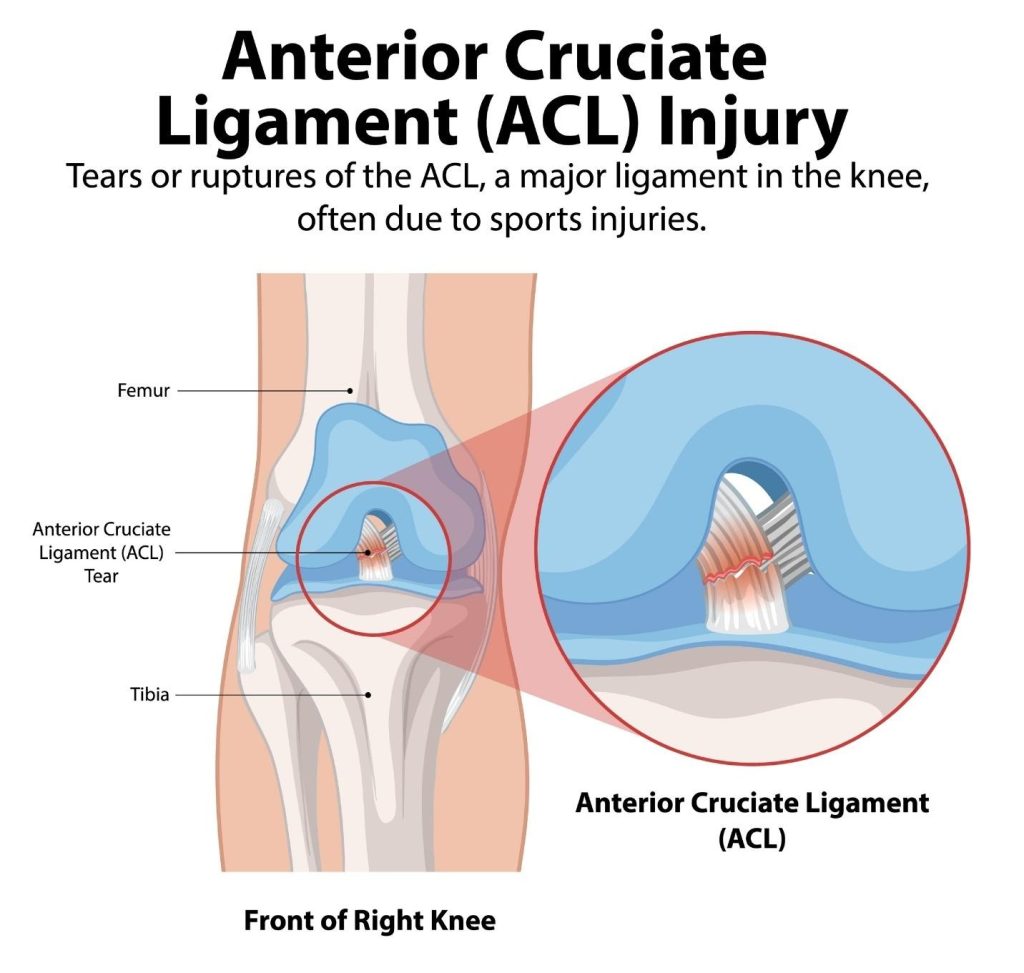
An ACL tear can make even ordinary movements feel uncertain. Walking, getting up from a chair or turning suddenly may become difficult when the knee is swollen, painful or feels as though it might give way.
The good news is that recovery is a process, not a single milestone. Whether an ACL tear is managed with rehabilitation alone or treated with ACL reconstruction, the knee gradually needs to regain its movement, strength, stability and confidence.
However, these two recovery pathways do not follow exactly the same timeline. In this article, we explain what can affect your ACL recovery and what you may generally expect at each stage.
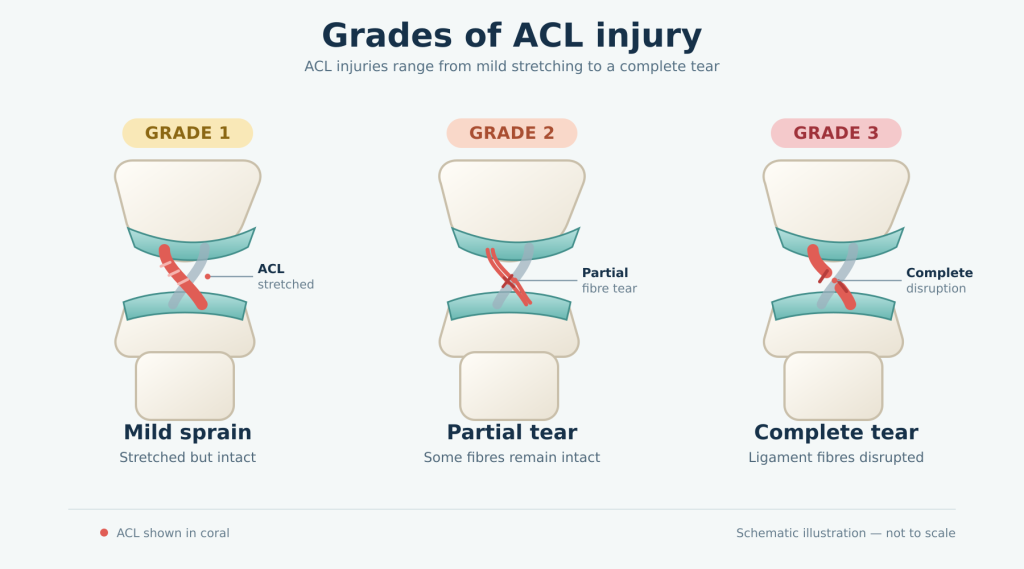
ACL recovery varies between individuals and depends on more than the number of weeks since the injury or operation. Important factors include:
Setbacks such as persistent swelling, stiffness or repeated instability may also slow rehabilitation. Ultimately, time provides a general framework, but functional readiness should determine progression.
An ACL tear may be managed with rehabilitation alone or with ACL reconstruction followed by rehabilitation. The appropriate approach depends on the injury, knee stability, associated damage and the patient’s activity goals.
| Without surgery | With ACL reconstruction | |
| What it involves | Structured rehabilitation without an operation | Minimally invasive arthroscopic surgery followed by rehabilitation |
| Who may be considered | Patients with a sufficiently stable knee or lower-demand activity goals | Patients with persistent instability, associated injuries or higher-demand sporting goals |
| Main focus | Improving strength, balance and control around the knee | Allowing the knee and graft to heal while restoring movement, strength and control |
| Progression | Based on symptoms, stability and function | Based on healing, symptoms, strength, function and movement control |
Not every ACL tear requires surgery. Some patients can regain sufficient knee function through rehabilitation, particularly when the knee does not repeatedly give way. However, recovery without surgery still requires active rehabilitation. It does not simply mean waiting for the injury to improve.
Non-surgical ACL recovery uses structured rehabilitation to improve the strength and control of the knee.
| Stage | General rehabilitation focus |
| Weeks 0-2 | Reduce pain and swelling, restore knee movement and begin walking safely. Crutches or a brace may be used if advised. |
| Weeks 2-6 | Restore a normal walking pattern and progressively strengthen the quadriceps, hamstrings, hips and core. |
| Weeks 6-12 | Build lower-limb strength, balance, endurance and single-leg control. Low-impact cardiovascular exercise may be introduced. |
| Months 3-6 | Progress towards running, jumping and more demanding movements if the knee remains stable and recovery criteria are met. |
| After 6 months | Gradually return to recreational or sporting activities based on strength, stability, movement control and confidence. |
If the knee continues to give way despite rehabilitation, further assessment may be required. Persistent instability can affect daily activities and may place other structures within the knee at risk.
After ACL reconstruction, rehabilitation must restore knee function while allowing the surgical wounds and ACL graft to heal. Associated procedures, such as meniscus repair, may change the timeline and weight-bearing restrictions.
| Stage | General rehabilitation focus |
| Weeks 0-2 | Manage pain and swelling, care for the wounds, regain knee extension, reactivate the quadriceps and walk safely with crutches. |
| Weeks 2-6 | Improve knee bending, progress towards a normal walking pattern and begin controlled strengthening and balance exercises. |
| Weeks 6-12 | Build strength, stability and single-leg control while gradually increasing exercise resistance and endurance. |
| Months 3-6 | Prepare for and gradually introduce running when appropriate strength, movement and symptom criteria have been met. |
| Months 6-9 | Introduce jumping, landing, agility exercises and progressively more demanding sport-specific drills. |
| Months 9-12 and beyond | Assess readiness for unrestricted sport using strength, functional movement, knee symptoms and psychological readiness. |
Nine months is often discussed as a milestone after ACL reconstruction, but it is not an automatic clearance date. Some patients require 12 months or longer before returning to sports involving frequent pivoting, jumping or rapid changes of direction.
Some pain, stiffness and swelling can occur during rehabilitation, particularly when exercises are progressed. However, contact your healthcare team if you experience:
Seek urgent medical attention if the knee appears severely deformed, the foot becomes cold, pale or numb, or you develop chest pain or difficulty breathing. Calf pain and swelling after surgery should also be assessed promptly.
Dr James Tan believes that orthopaedic care does not end with a diagnosis or operation.
Surgery, when required, is only one part of the journey. Appropriate rehabilitation, follow-up and guidance are equally important in helping the knee regain its strength, stability and function.
If you have sustained an ACL injury, continue to experience knee instability or would like guidance on your recovery, arrange an appointment with Dr James Tan for an assessment and an individualised treatment plan.
Recovery depends on the severity of the injury, whether reconstruction is required and the activities the patient wants to resume. Everyday function may improve within the first few weeks or months, while returning to demanding sports can take considerably longer.
Some ACL tears can be managed without reconstruction when the knee remains sufficiently stable. Structured rehabilitation can improve strength, balance and movement control. However, a completely torn ACL may not return to its original structure, and repeated instability may require further assessment.
Patients are often encouraged to begin walking with crutches soon after surgery, according to their surgeon’s instructions. Progression towards walking without crutches depends on pain, swelling, muscle control, associated procedures and the ability to walk without a significant limp.
Some patients may begin a gradual running programme between three and six months after surgery. However, running should only be introduced after sufficient knee movement, strength and control have been restored without significant pain or swelling.
Return to sport is commonly considered from around nine months after reconstruction, although some patients require 12 months or longer. Readiness should be assessed using strength, movement, functional testing, knee symptoms and psychological confidence rather than time alone.

Get in touch with Orthopaedic Specialist Dr James Tan today to discuss your concerns and explore the best treatment options for your bones, joints, muscles and spine.


Monday - Friday: 8:30am - 5:30pm
Saturday: 8:30am - 12:30pm
Sunday & Public Holiday: Closed


