


Physiotherapy is commonly recommended for shoulder pain to improve movement, strengthen supporting muscles and restore everyday function. However, some patients continue to experience pain, stiffness or weakness despite attending regular sessions and following their prescribed exercises.
Persistent symptoms do not necessarily mean that physiotherapy has failed. Some shoulder conditions require longer rehabilitation, while others may need further investigation or a different treatment approach. Knowing when to seek specialist assessment can help patients understand why their symptoms persist and what to do next.
Physiotherapy helps restore shoulder movement, strength and function. What it can achieve depends on the cause of your pain. With a torn rotator cuff tendon, for example, exercises can strengthen the muscles around the shoulder, but the tendon may still be torn. If you struggle to lift your arm or have noticeable weakness after an injury, see a shoulder specialist promptly.
Shoulder pain can also come from the neck. An irritated nerve may cause pain that travels down the arm, sometimes with tingling or numbness. If the pain starts in the neck, the treatment plan needs to address that source.If pain, weakness or stiffness still interferes with daily activities after a course of physiotherapy, a medical assessment can help identify what is limiting your recovery.
| Condition | Typical symptoms | Why further assessment may be needed |
| Rotator cuff tendinopathy or tears | Pain when lifting the arm, weakness and night discomfort | Significant tears or persistent weakness may require imaging and additional treatment |
| Frozen shoulder | Progressive stiffness, pain and difficulty reaching behind the back | Severe restriction may require pain management or additional interventions |
| Shoulder instability or labral injuries | Repeated slipping sensations, catching or dislocations | Recurrent instability may indicate damage to stabilising structures |
| Shoulder osteoarthritis | Deep joint pain, stiffness and reduced movement | Advanced joint damage may limit improvement with physiotherapy |
| Cervical nerve irritation | Shoulder pain with possible neck pain, tingling or arm numbness | The source of pain may be outside the shoulder joint |
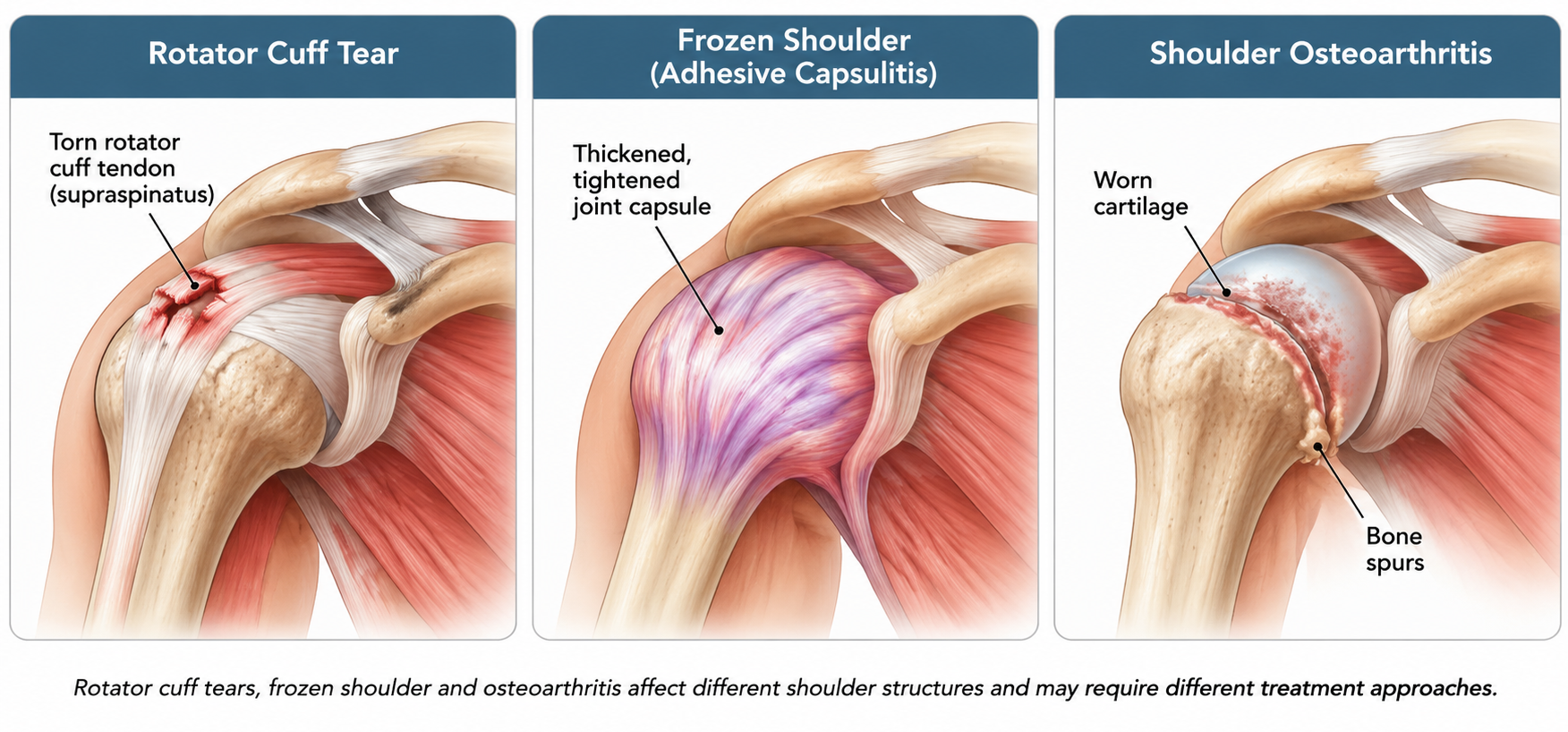
New weakness after an injury, especially if you struggle to lift your arm, can be a sign of a rotator cuff tear and deserves prompt assessment.
With frozen shoulder, exercises may need to be gentler when pain is high, with the programme adjusted as symptoms change.
How long to continue physiotherapy depends on your condition and the progress you’re making. Consider seeing an orthopaedic specialist if you notice any of the following:
Seek urgent medical care if you have any of the following
Shoulder or arm pain accompanied by chest pressure, breathlessness, sweating or faintness may indicate a cardiac emergency and requires immediate emergency care.
At your consultation, Dr James Tan will ask when the pain started, whether you injured your shoulder and which movements bring on your symptoms. He’ll also ask what you’ve tried in physiotherapy and how your shoulder responded. During the examination, he’ll check your shoulder strength and stability and compare how far you can move your arm on your own with how far it moves when he guides it. If you have pain, tingling or numbness down your arm, he may examine your neck and check your nerve function.
Your symptoms and examination will guide whether you need any imaging.
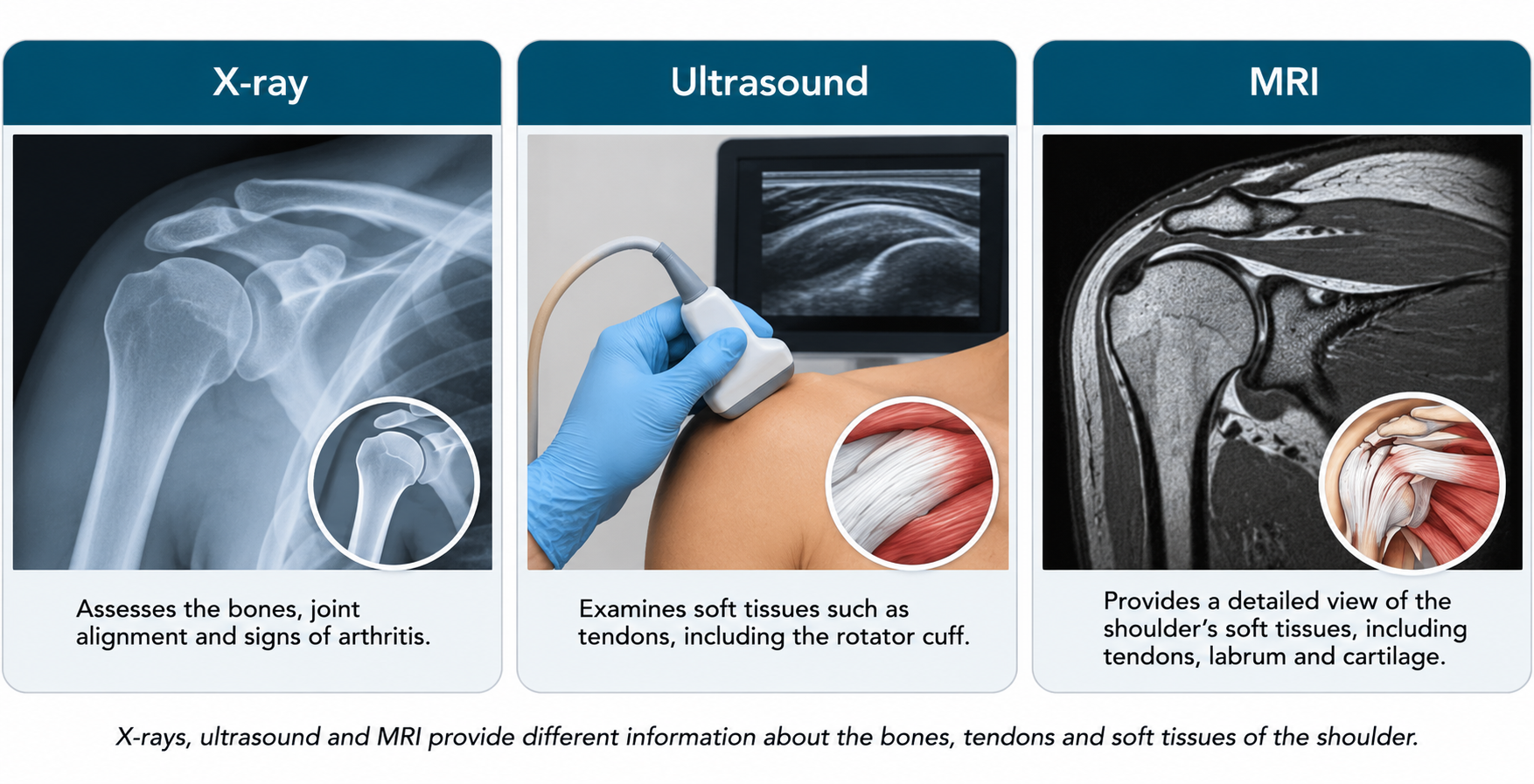
| Investigation | When it may be useful |
| X-ray | Assessing fractures, arthritis, joint alignment and bone abnormalities |
| Ultrasound | Examining rotator cuff tendons, bursitis and certain soft-tissue injuries |
| MRI | Investigating tendon tears, labral injuries and other soft-tissue abnormalities in greater detail |
When imaging is needed for ongoing shoulder pain, an X-ray is often the first test. If the X-ray does not explain your symptoms, ultrasound or MRI may help assess the tendons or other soft tissues.
Dr Tan will review any scans alongside your symptoms and examination. He may recommend an MRI if it could clarify the diagnosis or change your treatment plan.
Dr Tan will discuss treatment based on the cause of your pain, what you’ve tried and how much your shoulder limits you. Options may include changes to physiotherapy, pain relief, injections or, for some conditions, surgery.
Your physiotherapist may modify exercises that flare your pain and gradually build up movement and strength as your shoulder tolerates more.
Pain relief can make daily activities and rehabilitation more manageable. Your doctor or pharmacist can advise whether paracetamol or an anti-inflammatory medicine is suitable for you.
For some people with frozen shoulder or rotator cuff-related pain, a corticosteroid injection can ease pain in the short term and make rehabilitation more manageable.
Platelet-rich plasma (PRP) injections are made from a small sample of your own blood. The sample is spun to separate out plasma with a higher concentration of platelets. Your doctor then injects it into the area being treated. Platelets release proteins called growth factors that help coordinate the body’s response to injury. The aim is to support the body’s repair response in the treated area.
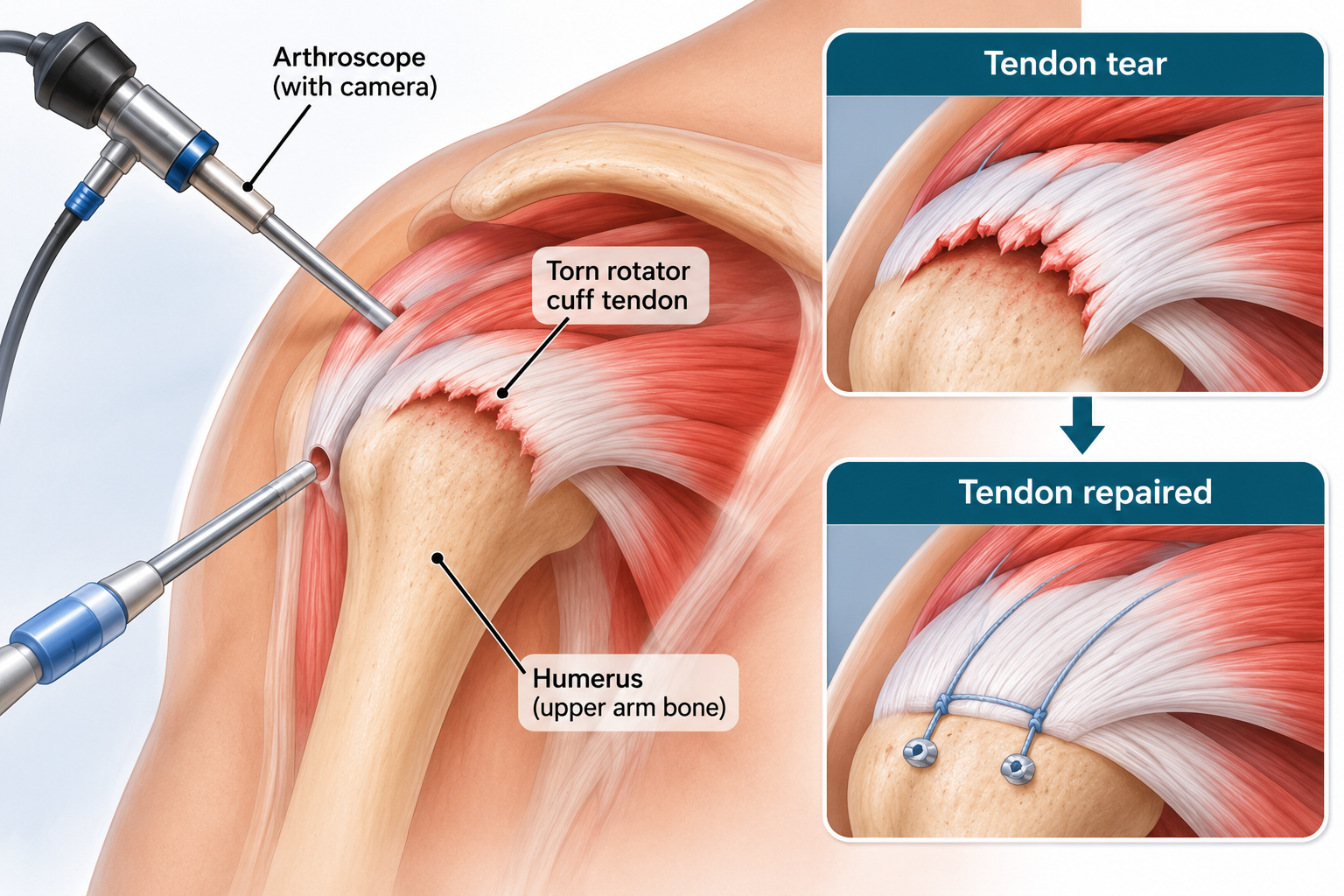
In arthroscopic (keyhole) surgery, the surgeon uses a small camera and instruments inserted through small cuts.
The procedure depends on which part of the shoulder needs treatment.
If surgery is an option, Dr Tan will explain what the procedure involves, its potential benefits and risks, and what rehabilitation would mean for you.
A shoulder replacement may be an option if advanced arthritis still causes substantial pain or limits daily activities despite non-surgical treatment.
In shoulder replacement surgery, the damaged joint surfaces are replaced with artificial components. The type of replacement depends in part on the condition of the joint and rotator cuff.
Many patients, including some with rotator cuff tears, improve with physiotherapy and other non-surgical treatments. Surgery may be worth discussing when a specific injury or joint problem continues to limit what you can do.
Here are some of the factors Dr Tan considers when discussing your options.
| Continued non-surgical treatment may be appropriate when | Surgical assessment may be appropriate when |
| Symptoms are gradually improving | Pain and disability remain substantial despite appropriate treatment |
| Shoulder strength and function are relatively well preserved | Significant weakness affects everyday activities |
| Imaging shows abnormalities that do not clearly explain the symptoms | A structural injury corresponds with symptoms and examination findings |
| The condition is expected to respond to further rehabilitation | Recurrent instability or a significant traumatic tendon tear is present |
| Symptoms remain manageable with conservative care | Advanced joint damage causes persistent functional limitations |
Dr Tan will consider what you need your shoulder to do at work, at home or in sport, alongside what he finds during the examination and on any scans.
If you’re still waking up with shoulder pain, struggling to reach overhead or finding it hard to return to sport despite physiotherapy, you may need more serious forms of treatment. The first step is getting to the root cause of your shoulder pain. Schedule a consultation with us for a detailed diagnosis and a personalised treatment plan.
There’s no fixed number of sessions. See a shoulder specialist if your progress has stalled or pain still affects your sleep, work or daily activities. If you suddenly lose strength after an injury, get assessed promptly.
Yes. Physiotherapy can ease pain and improve shoulder function for some people with a rotator cuff tear. Your doctor will consider how the tear happened, its size and whether weakness is making everyday activities difficult.
Speak with your physiotherapist if a movement consistently worsens your pain or if pain lingers after a session. They can adjust the exercise or how much you do. If you’re still struggling despite those changes, ask your doctor to review your shoulder.
Your doctor may be able to plan treatment after an examination, sometimes with an X-ray or ultrasound. An MRI may help if more detail about a suspected injury would affect your treatment.
Tell your physiotherapist which movement brought back the pain and whether you recently increased the weight, intensity or frequency of your exercise. If the pain keeps returning or you notice weakness, arrange a shoulder assessment.

Get in touch with Orthopaedic Specialist Dr James Tan today to discuss your concerns and explore the best treatment options for your bones, joints, muscles and spine.


Monday - Friday: 8:30am - 5:30pm
Saturday: 8:30am - 12:30pm
Sunday & Public Holiday: Closed


